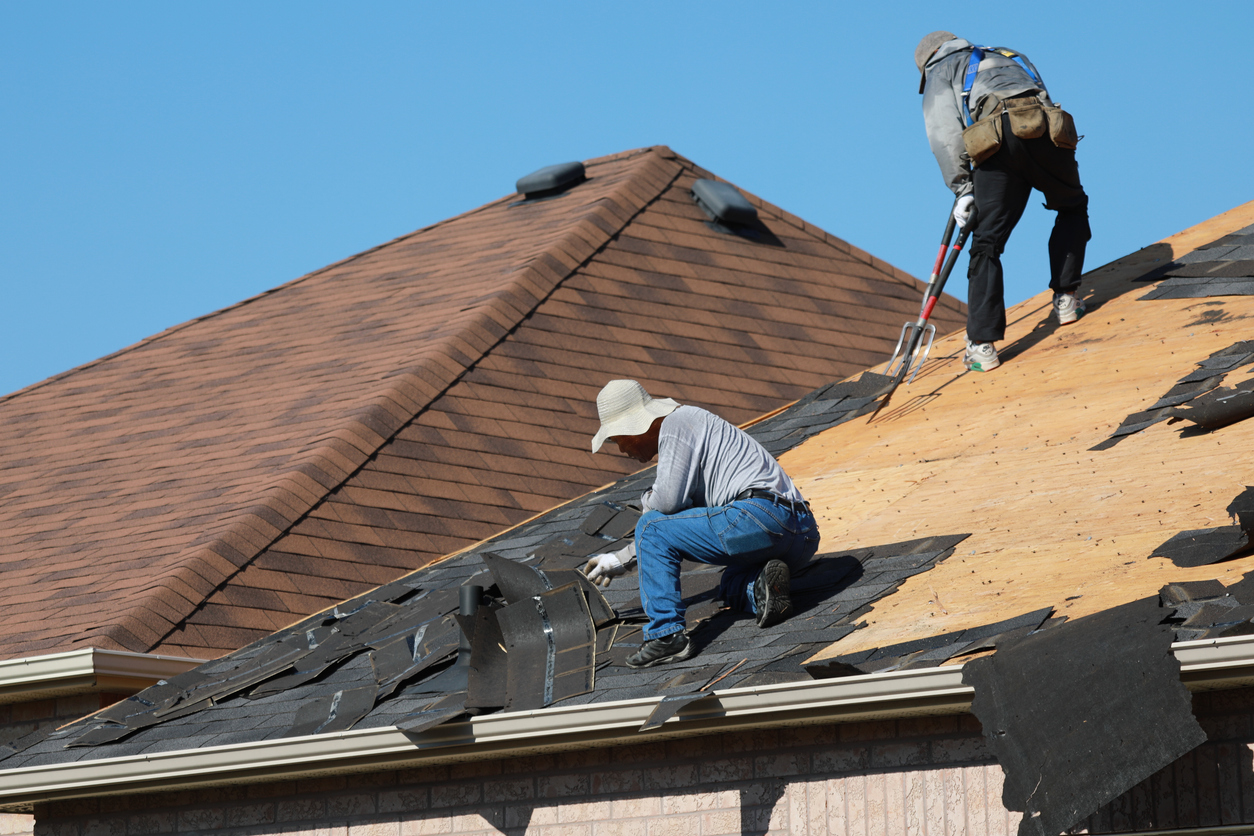

As I drive around the South Bend/Elkhart region, something is impossible to ignore. It seems like every skilled tradesperson with a ladder and a truck has left the big companies to strike out on their own, wrapping a new F-350 with fresh branding and betting on themselves.
As the owner of a market research company, I had one immediate question: Is this a real trend, or my imagination?
At Thrum Analytics, we don’t rely on gut feelings. We go to the data. And the data is clear: the surge of independent roofing contractors isn’t a local quirk, it’s a massive, measurable national movement. The U.S. roofing market is a $59.2 billion industry, and it is remarkably fragmented. The National Roofing Contractors Association estimates roughly 100,000 roofing companies operate across the country, yet the top 100 largest providers control only 17% to 18% of total market share. That leaves an enormous slice of the pie for local, independent operators right here in the Midwest.
Why the Sudden Surge?
Why are so many skilled roofers deciding to hang their own shingles in 2025? The research points to a confluence of demand pressure and structural opportunity.
Local need is undeniable. Across the U.S., 44% of single-family homes are now over 30 years old, sitting squarely in the replacement window. Layer on this region’s specific climate realities: lake-effect snow, aggressive freeze-thaw cycles, and spring hail events. What you get is non-discretionary, necessity-driven demand. Homeowners aren’t browsing. They’re being forced to act to protect their most valuable asset.
Compounding that demand is a severe labor crisis. Currently, 85% of contractors report difficulty hiring skilled workers, and the broader construction sector needs an estimated 439,000 new workers this year just to keep pace. When skilled labor is genuinely scarce, experienced tradespeople quickly recognize something important: they can earn more working for themselves than punching a clock for someone else.
The Hidden Trap of Going Solo
Here’s where the data gets sobering. Knowing how to install a roof and knowing how to run a roofing business are two entirely different disciplines. Our research reveals several critical traps threatening new solo operators.
Independent roofers are competing on local craftsmanship while simultaneously facing private equity firms aggressively consolidating the industry. These PE-backed organizations leverage massive scale to win national accounts and unlock bulk purchasing advantages, creating relentless downward pressure on local pricing.
Then there’s the rising cost of customer acquisition. The yard sign and Yellow Pages era (do we even remember what that means?) is over. Digital lead generation is intensely competitive, and the F-350 with the custom wrap carries a substantial monthly payment. The average Cost Per Lead for Google Search Ads in roofing now sits between $187 and $228, among the most expensive home service categories in digital advertising. Contractors who can’t convert those expensive clicks burn through startup capital quickly. Too many confuse cheap, shared leads, which create a race to the bottom on price, with exclusive, high-intent leads that actually convert into revenue.
Understanding the Modern Homeowner: The Thrum Personas Advantage
So how does a local roofer make sense of this landscape? The global roofing industry is undergoing a genuine structural shift, evolving from a traditional construction trade into a technology-integrated service sector shaped by sophisticated digital acquisition and advanced material science.
At Thrum Analytics, understanding what actually drives homeowner decisions is our core function. We do this through a proprietary research methodology we call Thrum Personas: sophisticated synthetic users built to deliver representative, research-grounded consumer insights. These are not generative AI systems guessing at behavior. They are powered by over 100,000 validated consumer research studies, completely rooted in real-world market data.
Thrum Personas allow us to simulate focus groups with (in this case) Midwestern homeowners, commercial facility managers, and experienced contractors. We stress-test messaging, pricing models, and trust signals before a single dollar is spent. The result is immediate, high-confidence intelligence without the cost and delays of traditional research methods.
We then compare the findings from Thrum Personas with others’ research to make sure that we’re on track. The combination of our PhD-level research expertise and the extensive 100,000+ studies makes us almost 95% reliable.
What does our research reveal? While many contractors aggressively emphasize “curb appeal,” only 21.8% of homeowners cite increasing home value as a primary purchase driver. The overwhelming majority are motivated by necessity, damage repair, and safety. If your positioning doesn’t speak directly to those core pressures, you are simply missing your audience.
The Thrum Playbook: How Small Roofers Win
Armed with this intelligence, you don’t need a private equity budget to compete in South Bend. But you do need to be precise. Here is what our research and Thrum Personas consistently reveal about turning inquiries into booked jobs, principles applicable to any small business serious about growth:
- Master the “Speed to Lead”
In 2025, response time is a decisive competitive variable. Research shows that responding to a digital lead within five minutes makes a contractor 21 times more likely to qualify that prospect compared to a 30-minute delay. A five-minute response time makes a contractor 100 times more likely to make contact at all. If you’re on a roof letting calls go to voicemail, you are effectively handing $200 leads to your competitors. High-performing contractors are implementing CRM automation to guarantee an immediate text or email response to every web form submission. - Close the Transparency Gap
Thrum Personas consistently surface the same friction point: the roofing industry carries a significant trust deficit, driven by storm-chasing operators and inconsistent workmanship. Over 75% of homeowners prioritize pricing transparency when evaluating contractors online, yet very few actually provide it. Listing starting prices, ranges, or clear financing options on your website builds immediate credibility and separates you from operators who obscure their costs. - Leverage Social Proof to Make the “Invisible” Visible
Because a roof is largely invisible from street level, homeowners struggle to assess quality until something goes wrong. Today, 91% of consumers consult online reviews before selecting a contractor, and 88% rank referrals as the single most important trust signal. If your Google Business Profile isn’t populated with recent five-star reviews and job-site photography, you are effectively invisible. Our research recommends a systematized review-generation process; contractors who actively solicit reviews see measurable improvement in conversion rates.
The Bottom Line
The roofing boom is real. The opportunity for independent operators is substantial. But surviving rising acquisition costs, consolidated competition, and an unpredictable climate requires more than trade expertise; it requires data-driven decision-making.
At Thrum Analytics, we help local business owners see the stories hidden inside the numbers. You know how to do the unique thing that you do. We know how to answer the questions that keep you up at night and build something that withstands the competition. By applying the deep consumer intelligence we provide and acting on the clear trends shaping the 2025 market, local operators can stop competing on low bids and start winning on insight.